A beginner guide from Malaysia Mermaid Club
Choosing your first mermaid tail is exciting. You might already have a favourite colour, a saved underwater photograph or an idea of how you want to look. But before ordering, it helps to understand the equipment that makes mermaid swimming possible.
The best mermaid tail for beginners is one that works with a suitable monofin, fits comfortably and matches your swimming ability and training. For many new mermaids, trying equipment during a course is a better starting point than buying an elaborate tail straight away.
At Malaysia Mermaid Club in Kota Kinabalu, Sabah, our PADI Mermaid courses help you learn how to use mermaid equipment as you develop your skills. This guide explains what to consider before choosing your own tail and monofin.
What is the difference between a mermaid tail and a monofin
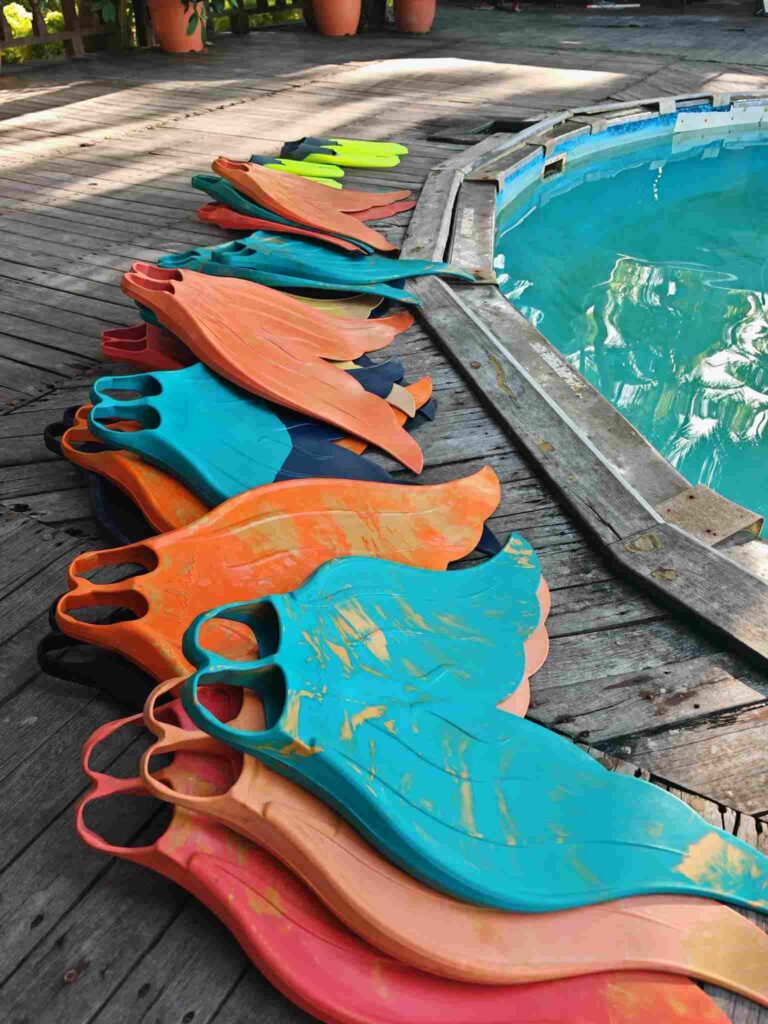
A monofin is a single swimming fin that holds both feet together. Its blade helps turn your dolphin kick into forward movement through the water. Foot pockets or other securing systems connect your feet to the fin, depending on the design.
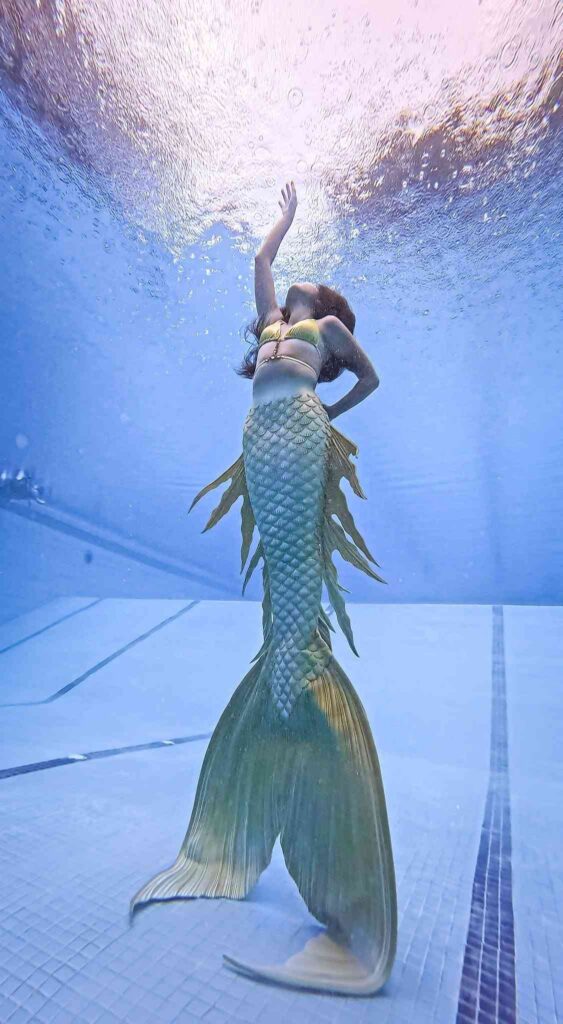
A mermaid tail is the covering that creates the mermaid appearance. Many fabric tails are separate skins worn over your legs and a compatible monofin. Other designs have different constructions, so always check exactly what is included.
The decorative fluke is the broad end of the tail. Its shape can affect how the whole setup moves and handles, but an impressive appearance does not tell you whether the equipment suits a beginner.
When shopping, look for clear information about the monofin, intended use, sizing and compatibility. A listing marked “tail skin only” usually means you need to buy the monofin separately. A costume intended for photographs or dressing up may be unsuitable for swimming.
Should you buy a mermaid tail before your first course
Usually, you can wait. Malaysia Mermaid Club provides equipment during applicable training programmes, so check the inclusions for your chosen course before purchasing anything. Our guide to your first PADI Mermaid course explains how the experience works.
Trying equipment under an instructor’s guidance helps you understand how a monofin feels, whether the foot fit is comfortable and how the tail affects your movement. You may discover that the design you admired online feels very different in the water.
If you already own equipment, tell the team before your course and share the brand, model and size. Your instructor can discuss its suitability for the planned training. Bring any manufacturer instructions with you.
If you simply want to try mermaiding, explore PADI Discover Mermaid. You can also check our mermaid course prices in Malaysia to plan your training budget before allocating money to equipment.
Fabric versus silicone mermaid tails
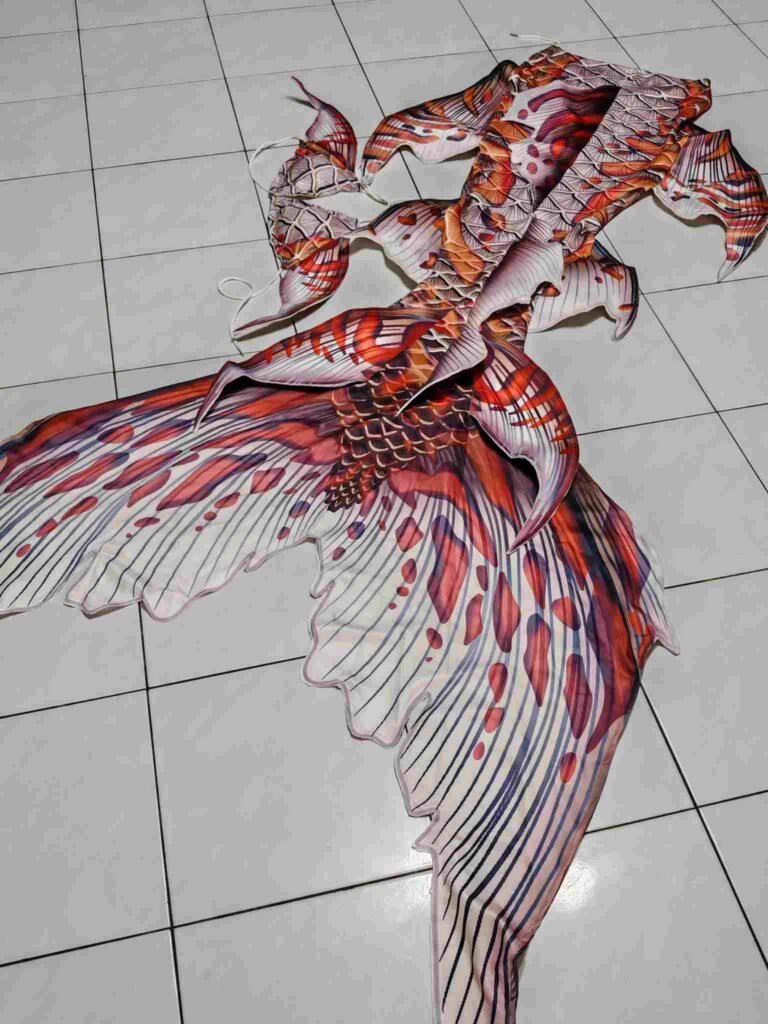
Fabric and silicone tails offer different experiences. Simple fabric designs are often a practical option to discuss for your first purchase. Silicone tails can offer sculpted detail and a realistic appearance, but their construction, handling and cost need careful consideration.
| What to compare | Fabric tail | Silicone tail |
| Construction | Usually a textile skin over a compatible monofin | Moulded silicone with model-specific fin construction |
| Appearance | Printed colours and patterns | Sculpted scales and dimensional details |
| Cost | Simple models generally cost less | Custom designs generally cost more |
| Transport | Simple designs are often lighter to pack | Can be heavier and bulkier to handle |
| Care | Check washing rules for the exact fabric | Check cleaning and storage rules for the exact tail |
| First purchase | Discuss a simple swimming design with your instructor | Discuss the demands of the specific design before buying |
These are broad comparisons, not guarantees. Some fabric tails have large inserts or additional fins that make them more demanding than a simple tail. Silicone designs also vary considerably. Evaluate the complete setup rather than relying on the material alone.
For a beginner, comfort and manageable equipment are useful priorities. You can develop your personal style once you know what you enjoy swimming in.
How to choose a monofin for beginners
The monofin deserves as much attention as the tail. Ask your instructor about a model intended for your activity and experience level, then check the manufacturer’s specifications.
Foot fit and comfort
Use the manufacturer’s sizing guidance rather than assuming your normal shoe size is enough. Feet should be held securely without painful pressure or numbness. Loose foot pockets may allow movement that makes the fin harder to control. If socks are recommended, account for them when checking the fit.
Blade size and flexibility
A larger or stiffer blade is not automatically an upgrade. Different designs require different effort and technique. For your first monofin, ask which option will let you practise controlled movement comfortably. Avoid choosing solely because a product promises speed or power.
Compatibility and removal
Confirm that the tail is designed for your exact monofin model and size. Two products from different brands may look compatible without fitting correctly. Learn how to put on and remove your setup during supervised training, following the manufacturer’s instructions. A removal feature is useful only when you understand how to use it.
Equipment supports technique. Our guide to how to swim like a mermaid explains the skills you develop alongside learning to use your fin.
Angelia’s Tip
“Choose your monofin first, confirm the foot fit and take your full foot measurements and provide that to the person you’re buying your fin from to ensure you get the correct size. Select a compatible tail skin. Keep the setup simple while you develop your technique.”

How to check your mermaid tail size
Follow the size chart for the exact tail you are considering. Depending on the design, you may need waist, hip and length measurements as well as monofin information. Ask the seller how to measure if anything is unclear.
A tail should stay in place without painfully squeezing your body or bunching around your legs. Check whether the manufacturer offers separate adult and child sizing, and whether returns are possible if the fit is wrong.
For children, avoid buying an oversized swimming setup to “grow into”. The equipment needs to fit its current user. Swimming readiness, course eligibility and supervision also matter; a suitable-looking size does not establish that a child is ready to swim with a tail.
Our article Can Anyone Become a Mermaid discusses age and swimming ability when choosing a training pathway.
Common mistakes when buying mermaid equipment
Choosing by colour alone can leave you with equipment that looks lovely but feels uncomfortable. Check fit and suitability before deciding between patterns.
Another common trap is comparing incomplete prices. One listing may include a monofin while another includes only the tail skin. Before ordering from overseas, check delivery charges, any applicable import costs, return shipping and warranty arrangements.
Be cautious about buying a very large fluke or elaborate accessories before gaining experience. Extra material changes the setup you need to manage. Discuss any change with your instructor before taking it into the water.
For second-hand equipment, ask about the model, age, repairs and condition. Inspect seams, foot pockets, straps and the blade, as applicable. Damage or an uncertain history can make an apparent bargain unsuitable.
Finally, keep money aside for training. Owning a tail does not replace learning to swim with it, manage the equipment and work with a trained buddy.
Using your mermaid tail with proper training
Mermaid equipment holds your legs together and changes how you swim. Learn its use with a qualified instructor in an appropriate setting. Never practise mermaid swimming or breath-hold diving alone, and do not hyperventilate before a breath hold. Children need close, active adult supervision as well as appropriate instruction.
Check that the pool permits mermaid tails and monofins. Follow its rules and your instructor’s guidance for entering and leaving the water. Remove your equipment before walking rather than trying to move around on land with your feet secured together.
For beginner certification, explore PADI Basic Mermaid. If your goal includes mermaiding in natural environments, discuss the PADI Advanced Mermaid course and the preparation needed for open water.
A tail that works for you in a pool does not make every ocean location suitable. Conditions, access, your training and buddy arrangements still determine what is appropriate. Protect marine life by keeping your body and fluke clear of coral and other fragile surroundings.
How to care for your mermaid tail and monofin
Start with the instructions supplied for your exact equipment. Fabric, silicone, painted surfaces, inserts and monofin materials may need different treatment.
After swimming, rinse away salt, chlorine, sand and debris with fresh water as directed. Separate removable components when the manufacturer recommends it, and let them dry completely before storage. Do not assume that every fabric tail is machine washable or that a monofin can go in a tumble dryer.
Keep equipment away from sharp surfaces and avoid dragging your tail across pool decks or rocks. Store the blade in its recommended position without forcing it into a bend. Inspect the setup before each session and ask the manufacturer or instructor about damage before using it again.
In Malaysia’s humid climate, allow enough drying time before packing your equipment away. A bag is helpful for transport, but it should not become permanent storage for a wet tail.
Frequently asked questions about mermaid tails
What is the best mermaid tail for beginners
Choose a swimming tail that fits correctly, works with a suitable monofin and matches your training. A simple fabric design is often worth considering, but your instructor can help assess the specific equipment.
Can I swim with a mermaid tail without a monofin
Some products are designed for different uses, including costumes. Do not improvise a swimming setup by removing a component it requires. Follow the product instructions and discuss the equipment with your instructor.
Is a silicone tail better than a fabric tail
The better choice depends on your purpose, fit, experience and budget. Silicone can provide detailed styling; fabric can offer a simpler starting point. Neither material alone guarantees suitability or safety.
How much should I spend on my first mermaid tail
Compare complete setups rather than the tail skin alone. Include the monofin, delivery and any other required costs. Try equipment during training first so your budget goes towards something you can comfortably use.
Start your mermaid journey in Kota Kinabalu
You do not need your dream tail to take your first step. Start by finding a course that suits your swimming experience, then use what you learn to make a more confident equipment choice.
At Malaysia Mermaid Club, we can discuss your training options and the equipment used during your chosen programme. Once you have completed your course, explore our Mermaid Club community to learn about opportunities to keep practising and meet other mermaids.
Ready to try mermaiding in Kota Kinabalu, Sabah? Contact Malaysia Mermaid Club on WhatsApp at +60 16 846 1720 or email Mermaid@MalaysiaMermaidClub.com. Tell us about your swimming experience and what you would like to achieve, and we will help you choose a suitable starting point.